Atomic Wallet: A Complete 1200-Word Overview
Managing digital assets requires a platform that is easy to understand, secure, and flexible. Atomic Wallet is a decentralized wallet application created to help users store and manage their digital assets directly on their own devices. Unlike centralized services that hold customer funds for them, Atomic Wallet is built around personal ownership, meaning users remain in charge of their private information.
This detailed overview explains the purpose of Atomic Wallet, how it works, what features it offers, how its security model is structured, and what users can expect from the overall experience. This is not financial advice — it is simply a breakdown of how the wallet works and what its system is designed to do.
Introduction to Atomic Wallet
Atomic Wallet is a software-based digital asset wallet that operates on a decentralized model. This means the wallet does not store user funds on external servers, and no third party has the ability to directly access users’ private keys. Instead, the wallet encrypts and stores information locally on the user’s computer or mobile device. This structure aims to give users more control over their assets.
The name “Atomic” is inspired by atomic swaps, a technology concept designed to allow certain cryptocurrencies to be exchanged directly between users without a centralized intermediary. Though the app has evolved over time, the core philosophy remains the same: provide a simple, user-driven interface where individuals can manage their assets with autonomy.
User Interface and General Experience
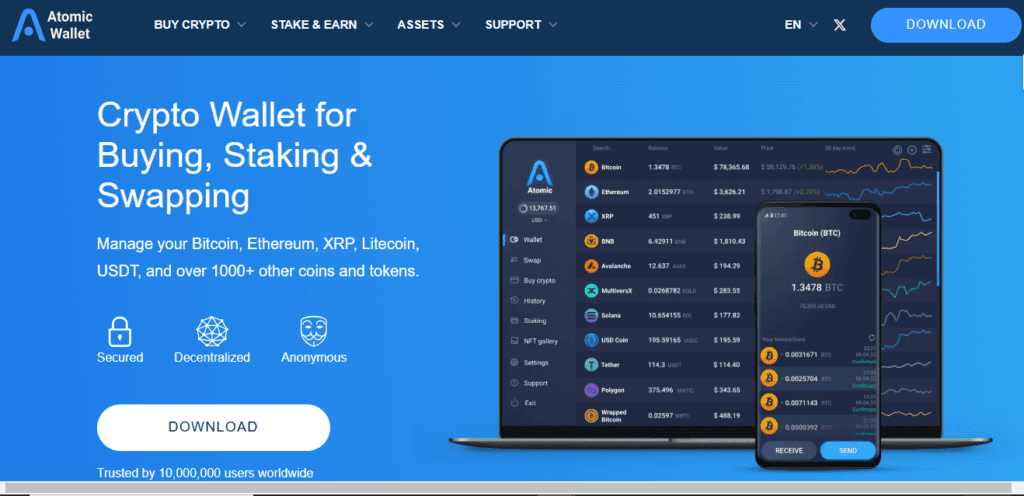
One of Atomic Wallet’s main strengths is its user-friendly design. The interface is clean, modern, and suitable for both beginners and experienced users. The layout is organized into logical sections, allowing users to move between features easily.
When opening the application, users typically see a dashboard displaying their assets, balances, and available options. The design focuses on clarity rather than complexity. Icons, menus, and tools are arranged in a way that minimizes confusion and allows users to quickly navigate to what they need.
The overall structure usually includes:
A dashboard summarizing holdings
A portfolio section with detailed information
Tools for sending and receiving
Built-in settings for customizing the app
Security and backup options
The goal of this layout is to make the experience smooth and predictable, even for individuals using a digital wallet for the first time.
Key Features of Atomic Wallet
Atomic Wallet includes several notable features designed to make digital asset management more accessible. These features emphasize convenience, flexibility, and user control.
Decentralized Storage Model
A defining characteristic of Atomic Wallet is that users retain control over their private keys. The wallet does not store keys or passwords on external servers. All sensitive information is encrypted and kept on the user’s device. This structure helps reduce the risk of large-scale data breaches because the platform does not hold customer information in centralized databases.
Multi-asset Support
The wallet is compatible with a large selection of assets across different networks. Users can view and manage various supported assets in one place instead of maintaining multiple separate wallet apps. This reduces the need for switching between platforms and simplifies the organizational experience.
Cross-Platform Accessibility
Atomic Wallet is available on several operating systems, including mobile and desktop environments. This accessibility ensures users can choose the device type that suits their preferences. The design and appearance remain similar across platforms, which keeps the experience consistent.
Simple Send and Receive Functions
The process for sending and receiving digital assets is made as straightforward as possible. Users typically only need to enter the destination address, choose the asset, confirm details, and send. Similarly, receiving requires displaying or copying the wallet’s relevant address.
Portfolio Tracking
The wallet provides built-in tracking features that allow users to monitor their balances and overall asset distribution. This can help users stay organized and understand how different assets are allocated.
Security Architecture of Atomic Wallet
Security is essential for any digital wallet. Atomic Wallet incorporates several layers of protection to strengthen user safety. However, it is important to understand that decentralized wallets place a high level of responsibility on the user — device security, backups, and safekeeping of recovery phrases are essential.
Local Encryption
All private keys and sensitive information are stored locally on the user’s device. The information is encrypted, meaning it cannot be accessed without the correct password.
Password Protection
A secure password must be created to access the wallet. This password unlocks the application and allows access to encoded data. Without it, the encrypted information remains inaccessible.
Recovery Phrase
During wallet setup, users are given a recovery phrase, sometimes referred to as a seed phrase. This phrase is the ultimate backup and can restore access to the wallet if the device is lost or damaged. Because it is extremely powerful, it must be protected carefully and never shared with anyone.
Device-Based Safety
Since everything is stored on the user’s device, the security of that device plays a major role. Updated software, antivirus protection, strong passwords, and safe browsing practices help keep the wallet environment secure.
Decentralized Access Model
There is no centralized account or login system. This means users are responsible for managing their own access. While this provides more independence, it also means recovery must be handled locally, not through a customer account.
How the Wallet Setup Process Typically Works
Setting up Atomic Wallet generally follows a simple series of steps. While the exact interface may vary depending on the device, the core process is consistent.
Step 1: Install and Open the Wallet
After installing the application and launching it, users are greeted with an option to create a new wallet or restore an existing one using a recovery phrase.
Step 2: Generate a New Wallet
Choosing the creation option initiates the setup process. The app generates a private key and a recovery phrase for the user. This phrase must be stored safely because it is the only backup available.
Step 3: Secure the Recovery Phrase
Users are asked to write down their recovery phrase and keep it in a secure location that only they can access. This step is critical in decentralized systems.
Step 4: Set a Password
A password must be created to protect daily access to the wallet. This password should be strong and unique.
Step 5: Enter the Dashboard
Once setup is complete, users access the main dashboard where they can view assets and explore features.
Common Issues Users May Encounter
Even with a streamlined design, some users experience occasional challenges. Here are common scenarios:
Lost Recovery Phrase
Since the recovery phrase is required to restore the wallet, losing it can prevent access if the device becomes unusable. This is why protecting the phrase is essential.
Forgotten Password
If a user forgets their password but still has access to the device and recovery phrase, they can typically restore the wallet and create a new password.
Device Problems
Software errors, outdated systems, or insufficient storage may affect performance. Updating the device and app usually resolves these issues.
Display or Sync Delays
Sometimes users may see slow updates in portfolio values due to network congestion or synchronization delays. These generally resolve automatically.
User Experience and Interface Philosophy
Atomic Wallet’s overall design focuses on clarity, simplicity, and autonomy. Rather than overwhelming users with complicated menus, the interface keeps essential options visible and easy to find. This approach makes the wallet appropriate for everyday use while maintaining a clean layout.
The wallet also emphasizes self-custody. Users are not required to create external login accounts or submit personal information. This independence can be appealing for those who prefer direct control over their digital tools.
Conclusion
Atomic Wallet is designed as a decentralized, user-controlled environment for managing digital assets. Its structure focuses on privacy, autonomy, and accessibility through features such as multi-asset support, local storage of private keys, encryption, and cross-platform availability. While the wallet offers a simple interface, users must take responsibility for securing their recovery phrase, password, and device.
Understanding these elements helps individuals use the wallet more confidently and navigate its features with greater awareness. With its combination of usability and decentralized security, Atomic Wallet provides a streamlined tool for managing digital assets while keeping control firmly in the user’s hands.